Your Brain Can Learn to Live With an Upside-Down World
In the 1890s a psychologist wore lenses that flipped his view upside down, and slowly learned to get around. Your brain is far more flexible about its senses than it seems.
The man who flipped his world
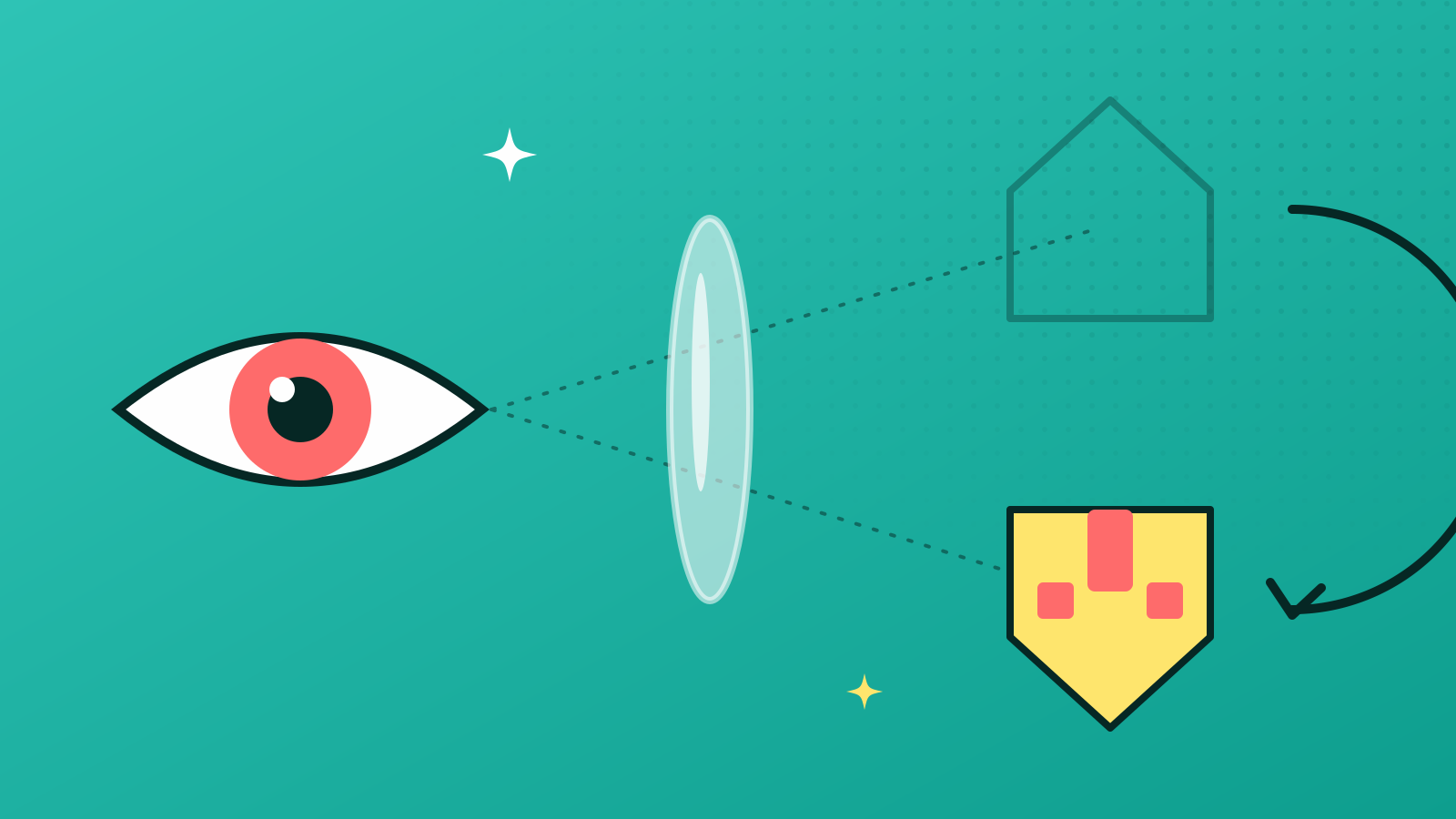
In the 1890s, American psychologist George M. Stratton tried an experiment most of us would skip. He wore a lens system over one eye (the other was covered) that turned his view upside down and swapped left and right.
At first, daily life was a mess. Reaching for things, walking, even feeding himself got clumsy and confusing. Every movement was guided by a picture that no longer matched his body.
In his 1897 report in Psychological Review, Stratton described wearing the lenses over eight days. Bit by bit, his movements got smoother and the strangeness faded. Getting around the flipped world felt more and more natural. When he finally took the lenses off, his ordinary view felt odd for a little while.
What Stratton actually "saw" by the end is still debated. Did the world look upright again, or did it just stop feeling wrong? Researchers don't fully agree. The main point isn't in question, though. Your brain can recalibrate how it links what you see to what you do.
Seeing with your skin
Seventy years later, neuroscientist Paul Bach-y-Rita and his colleagues pushed the idea further. In a 1969 paper in Nature, they described a system that turned a camera's image into patterns of vibration on a person's back.
With practice, blind participants learned to use those patterns to recognize and locate objects. The information came in through their skin, but they learned to treat it as information about things out in the room. That's normally vision's job.
Your brain reuses its own hardware
Later brain imaging showed this goes beyond learning a clever trick. A 1996 study in Nature by Norihiro Sadato and colleagues scanned people who had been blind since early life while they did touch tasks, including reading Braille.
Their primary and secondary visual cortex became active during those tasks. In sighted volunteers, the same areas did the opposite and quieted down. So brain regions you'd think are "reserved" for vision can be put to work by other senses.
What to take from this
If you've ever wondered whether "visual cortex" means vision forever, the answer is no. The label describes its usual job, not its only job. Your brain keeps tuning the connection between what you sense and how you move.
There are limits, of course. Adapting takes time and effort. It seems to work best when people actively move and interact with things. And it's generally strongest early in life.
Go deeper
If you like finding out how much your brain fills in on its own, read our story on why your brain sometimes sees things that aren't there. It's the flip side of the same flexible, guess-first system.
Sources
Fact-checked and editorially reviewed on .
- Vision without inversion of the retinal image, Psychological Review (Stratton), 1897
Stratton's account of wearing inverting lenses for days at a time.
- Vision Substitution by Tactile Image Projection, Nature (Bach-y-Rita et al.), 1969
Camera images converted into patterns of touch on the back.
- Activation of the primary visual cortex by Braille reading in blind subjects, Nature (Sadato et al.), 1996
Visual cortex activity during touch tasks in people blind from early life.
Spotted an error? Tell our editors.